


.png)
Manufracture Music presents Transmutation feat. Enzo
- hace 20 minutos
- 4 min de lectura
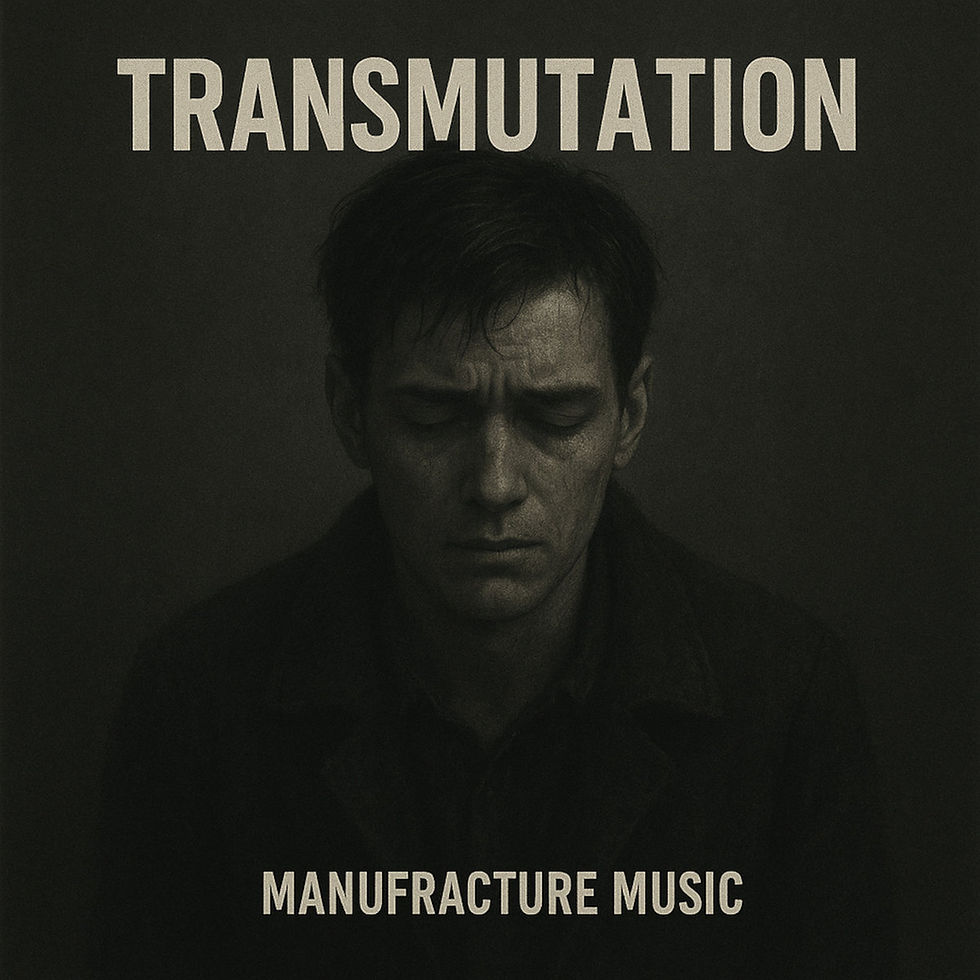
Industrial music has always been fascinated with transformation. Not the optimistic transformation promised by technology companies, nor the utopian visions imagined by futurists, but something darker: the mutation of bodies into systems, cities into machines and human voices into signals struggling to survive beneath layers of noise. On Transmutation feat. Enzo, the latest release from Manufracture Music, that fascination becomes both subject matter and sonic method.
Recorded during a concentrated 48-hour hardware-only session, Transmutation arrives wrapped in the language of analog devotion: unstable oscillators, machine-driven percussion, distorted circuitry and a deliberate rejection of software polish. Such descriptions have become increasingly common in contemporary electronic music, where hardware often serves as a shorthand for authenticity. Yet what makes Transmutation compelling is that its analog foundations feel integral to the music rather than simply part of its marketing narrative. The rough edges, imperfections and moments of instability are not aesthetic decorations; they are fundamental to the track's identity.
Manufracture Music is the darker manifestation of Viennese producer Valerian Steel's creative vision, a project rooted in Industrial, EBM, Darkwave and Coldwave traditions. The influences are immediately recognizable. Distorted bass sequences drive the arrangement forward with relentless momentum. Percussion lands with mechanical precision. Atmospheres unfold like fog gathering inside an abandoned factory long after production has ceased. Yet despite drawing heavily from the history of underground electronic body music, Transmutation never feels trapped by nostalgia.
That distinction is important. Over the past decade, industrial and EBM have experienced a notable resurgence. Across Europe and North America, younger producers have rediscovered the sounds pioneered by acts such as Front 242, Nitzer Ebb and Skinny Puppy, often reproducing their aesthetics with impressive technical accuracy. The problem is that accuracy alone rarely produces relevance. Too many contemporary revivalists treat industrial music as a museum piece rather than a living language.
Transmutation succeeds because it understands that the anxieties which originally fueled industrial music have not disappeared. They have simply evolved.
The track opens with uneasy textures that seem suspended between ambience and malfunction. Synthesizers drift across the stereo field without fully resolving into melody, creating a sense of anticipation that feels almost cinematic. Rather than rushing toward the dancefloor, Manufracture Music allows tension to accumulate gradually. There is an impression that something is awakening beneath the surface, some dormant mechanism slowly returning to life.
When the rhythm eventually emerges, it does so with remarkable discipline. The kick drum is heavy without becoming excessive. The bassline is distorted yet carefully controlled. Every element appears calibrated for maximum physical impact while preserving enough space for the surrounding atmosphere to breathe. This balance becomes one of the track's greatest strengths.
Many modern industrial productions rely on brute force. Distortion is layered upon distortion until every frequency competes for attention. The result may sound aggressive, but often lacks depth. Transmutation adopts a more sophisticated approach. The arrangement understands the value of restraint. Moments of relative emptiness allow individual sounds to retain their weight. Silence becomes as important as noise.
The production also benefits from Steel's broader experience beyond club-focused music. His ambient and cinematic work under other creative identities is evident throughout the track's construction. Beneath the EBM framework lies an attention to environmental detail that elevates the music beyond straightforward dancefloor functionality. The track does not simply provide rhythm; it creates a setting.
That setting is unmistakably dystopian. Throughout its duration, Transmutation evokes images of decaying infrastructure, abandoned industrial districts and urban landscapes illuminated by flickering artificial light. Yet the dystopia presented here feels contemporary rather than retro-futuristic. This is not the neon cyberpunk fantasy that dominates so much electronic music imagery. Instead, it resembles the quieter reality of modern decline: systems stretched beyond capacity, technologies that no longer inspire confidence and cities struggling to maintain coherence under constant pressure.
Enzo's vocal contribution plays a crucial role in reinforcing this atmosphere. Rather than dominating the mix, the vocals emerge as fragmented human traces embedded within the machinery. They feel less like a narrator guiding the listener and more like evidence of human presence within an increasingly automated environment. The performance carries a sense of distance and vulnerability that contrasts effectively with the track's mechanical framework.
This interplay between human and machine forms the emotional core of Transmutation. Throughout the track, neither side fully overcomes the other. The percussion continues its relentless forward motion. The synthesizers remain cold and impersonal. Yet the vocals persist, refusing to disappear entirely beneath the weight of the production. That unresolved tension gives the music much of its power.
The title itself proves fitting. Transformation is not presented as liberation but as a process of adaptation within hostile conditions. The listener is not invited to escape the dystopian environment imagined by the music. Instead, they are immersed within it. The dancefloor becomes a site of negotiation between control and chaos, between technological systems and human expression.
What ultimately distinguishes Transmutation feat. Enzo from many contemporary industrial releases is its sense of purpose. Every aesthetic choice serves a larger conceptual framework. The analog hardware, the distorted basslines, the coldwave atmospheres and the mechanized rhythms all contribute to a coherent vision rather than existing as isolated stylistic references. The track understands the traditions from which it emerges, but it also recognizes that those traditions remain relevant precisely because the conditions they addressed have not disappeared.
If there is a criticism to be made, it is that some listeners may wish for greater structural development over the course of the arrangement. The hypnotic repetition that gives the track its physical power occasionally limits its dramatic range. Yet even this restraint feels consistent with the project's overall philosophy. Transmutation is less interested in delivering climactic moments than in sustaining a particular psychological state.
In an era where electronic music often prioritizes immediacy and algorithmic accessibility, Manufracture Music chooses a more uncompromising path. Transmutation feat. Enzo is dark, disciplined and unapologetically immersive. It draws from decades of industrial and EBM history without becoming imprisoned by them, transforming familiar influences into something that feels relevant to the uncertainties of the present moment.
Rather than merely revisiting the past, Transmutation asks what industrial music can still communicate in a world where technological alienation is no longer a speculative concept but an everyday reality. The answer, at least here, arrives through distortion, repetition and relentless body-moving momentum. It is a transmission from the shadows of the modern city: damaged, persistent and impossible to ignore.


Comentarios